Should You Grade Your One Piece Card? ROI Calculator + Guide
Grading isn’t always worth it. The right question isn’t “Is this card cool?”—it’s “Will the graded premium exceed all costs?” Here’s a collector‑friendly way to decide.
When does grading pay off?
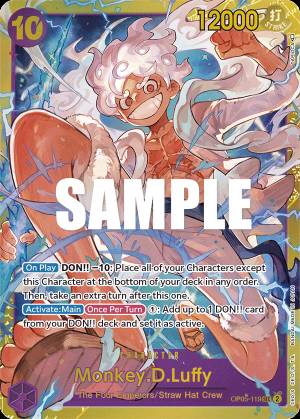
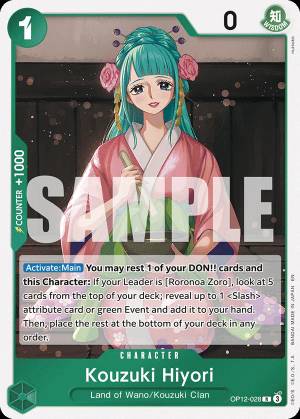
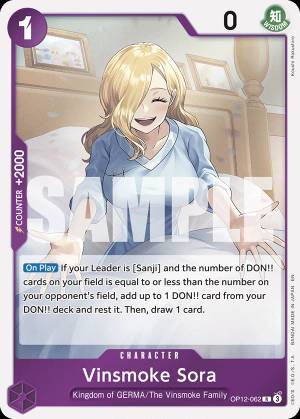
If a card’s graded premium is significantly larger than fees and shipping, grading can be a smart move. High‑value chase cards usually qualify; mid‑range cards often don’t unless the condition is pristine.
ROI formula
ROI = (graded value − raw value − grading fees − shipping/insurance) ÷ total costIf your ROI is negative or barely positive, keep the card raw and track its price instead.
Condition checklist before you grade
- Clean edges with no whitening
- Centering within tolerance
- No surface scratches or print lines
- Strong corners with no fraying
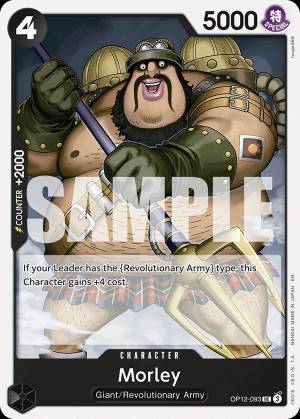

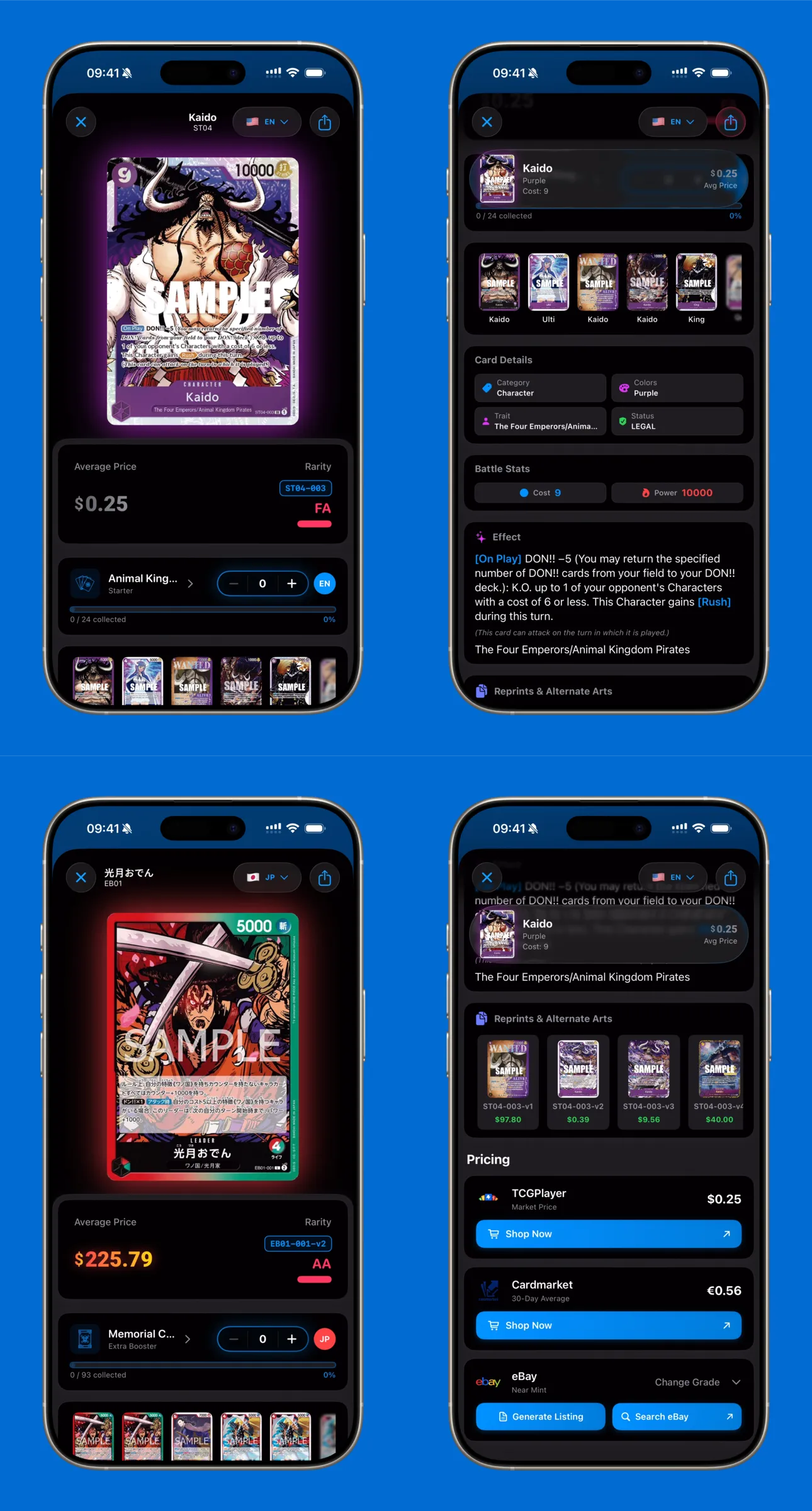
Use Haki TCG before you submit
Scan the card, record the raw value, and save it to your watchlist. That gives you a baseline for ROI and makes it easy to monitor post‑grading value changes.
CTA: Use Haki TCG to compare raw vs. graded value before you submit.
Related Articles
- One Piece TCG Card Condition Guide: Grade Your Cards at Home
Learn how to evaluate One Piece card condition with a simple, repeatable checklist before you trade or grade.
- How to Spot Fake One Piece TCG Cards (2026 Guide)
A practical visual checklist for identifying counterfeit One Piece TCG cards, with focus on common tells and high‑risk chase cards.
- Most Expensive One Piece Cards Right Now (Updated 2026)
A live‑tracking list of the most valuable One Piece TCG cards, plus what drives their value and how to monitor them.

あなたのワンピースカードを 今すぐ見つけよう。
市場トップクラスの精度でカードを即時識別。デッキビルダーも搭載。