Anime 25th Collection (Luffy era) Cards in One Piece TCG: Every Print, Every Price
Anime 25th Collection (Luffy era) is a Anniversary collection prints from the Cross-arc retrospective. The Anime 25th Collection prints celebrate One Piece’s 25th anniversary with retrospective character treatments. Top prices concentrate on Luffy, Zoro, and Shanks alt-arts from various Anime 25th products. Across the One Piece TCG database, 202 Anime 25th Collection (Luffy era) prints have current TCGPlayer prices, ranging from $0.10 to $973.79. This post is the full price ladder as of 2026-05-10, with explanations of what each tier represents.
Anime 25th Collection (Luffy era) top 6 prints · top at $973.79 (202 priced prints tracked)

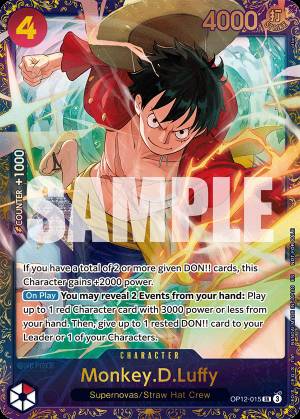
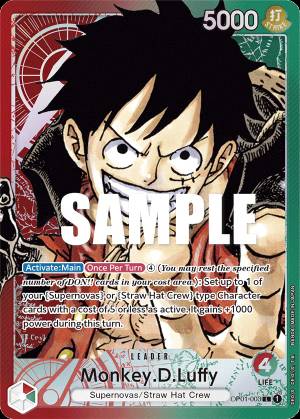
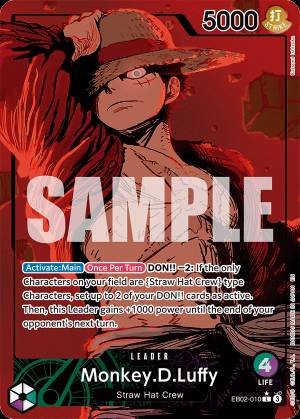
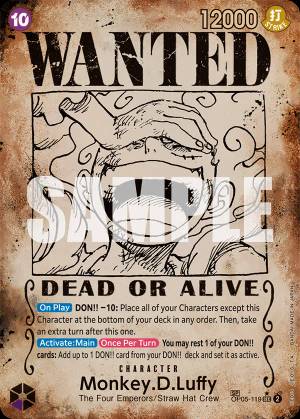
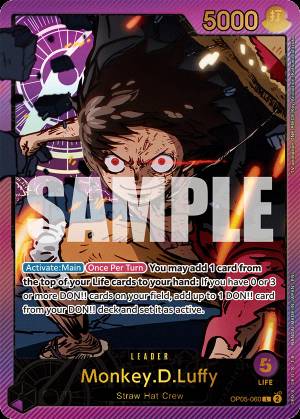
The full Anime 25th Collection (Luffy era) price ladder
| Tier | Card | Code | Rarity | Price |
|---|---|---|---|---|
| Chase | Monkey.D.Luffy | EB02-010-v2 | AA | $973.79 |
| Chase | Monkey.D.Luffy | OP12-015-v2 | AA | $893.08 |
| Chase | Monkey.D.Luffy | OP01-003-v1 | AA | $795.50 |
| Chase | Monkey.D.Luffy | EB02-010-v1 | AA | $731.35 |
| Chase | Monkey.D.Luffy | OP05-119-v3 | AA | $729.27 |
| Chase | Monkey.D.Luffy | OP05-060-v5 | AA | $649.25 |
| Chase | Monkey.D.Luffy | P-033-v1 | C | $644.36 |
| Chase | Monkey.D.Luffy | ST10-006-v3 | AA | $640.85 |
| Chase | Monkey.D.Luffy | ST01-012-v8 | FA | $637.03 |
| Chase | Monkey.D.Luffy | EB02-061-v3 | AA | $611.02 |
| Chase | Monkey.D.Luffy | OP09-119-v3 | AA | $566.77 |
| Chase | Monkey.D.Luffy | OP13-118-v4 | AA | $475.82 |
The full list extends below; only the top 12 prints are shown above. Browse /cards and search “Luffy” for the complete catalog.
The chase tier
Monkey.D.Luffy (EB02-010-v2) — $973.79. AA/FA-rarity alt-art print from the EB02 set. Monkey.D.Luffy (OP12-015-v2) — $893.08. AA/FA-rarity alt-art print from the OP12 set. Monkey.D.Luffy (OP01-003-v1) — $795.50. AA/FA-rarity alt-art print from the OP01 set. Monkey.D.Luffy (EB02-010-v1) — $731.35. AA/FA-rarity alt-art print from the EB02 set. Monkey.D.Luffy (OP05-119-v3) — $729.27. AA/FA-rarity alt-art print from the OP05 set. Monkey.D.Luffy (OP05-060-v5) — $649.25. AA/FA-rarity alt-art print from the OP05 set.
These are the Anime 25th Collection (Luffy era) prints with durable long-term collector demand.
The mid tier
Several mid-tier ($50–$200) prints sit in the working tier:
- DON!! Card [Luffy Gear 5 Gold] (
DON-10856364) at $185.96 — PROMO-rarity from DON. - DON Card [Luffy Gold] (
DON-8745038) at $176.50 — PROMO-rarity from DON. - Monkey.D.Luffy (
OP01-024-v1) at $155.54 — AA-rarity from OP01. - Monkey.D.Luffy (
P-041-v2) at $151.65 — C-rarity from P. - Monkey.D.Luffy (
OP07-091-v1) at $149.77 — C-rarity from OP07.
How Anime 25th Collection (Luffy era) cards age
Anime 25th Collection (Luffy era) is in the top tier of character-collector demand. The chase prints have appreciated steadily over 12 months, and the floor on AA-rarity prints rarely drops below $30. If you’re starting a Anime 25th Collection (Luffy era) subset, the cheapest AA-rarity entry point is the most defensible buy.
Print disambiguation
The Haki app’s scanner identifies all Anime 25th Collection (Luffy era) variants by their -v suffix automatically. For buyers verifying photos before paying, two checks:
- Variant suffix in the bottom-right rarity stamp. Real Bandai cards print the rarity badge with a slight emboss you can feel with a fingernail. Different
-vnumbers indicate different foil treatments and reprint runs. - Foil pattern direction. AA-rarity cards have a directional foil that runs at a specific angle. Different variants of the same card use different angles. If a listing’s photo doesn’t clearly show the foil, ask for a tilted photo before paying.
FAQ
How do I tell two Anime 25th Collection (Luffy era) prints apart?
Check the full card code in the bottom-right corner. A code like OP05-022-v2 tells you the set (OP05), the card number (022), and the variant (-v2). All three together uniquely identify the print. Different variants of the same card identity have different prices ranging from $5 to $200+.
Are Anime 25th Collection (Luffy era) cards being reprinted in newer sets?
Likely yes — characters with $973.79-tier chase prints typically see new alt-art versions in subsequent sets. Watch the next 2-3 booster releases.
What’s the cheapest entry point for a Anime 25th Collection (Luffy era) collection?
Monkey.D.Luffy (OP09-036) at $0.10. The lowest-priced AA-rarity Anime 25th Collection (Luffy era) print currently in print.
Are Anime 25th Collection (Luffy era) chase prints commonly faked?
Yes — any Anime 25th Collection (Luffy era) print priced above $300 is a target for counterfeit listings. The most-faked One Piece cards post covers the print-level authentication checklist for high-value buys.
Can I scan Anime 25th Collection (Luffy era) cards with the Haki app?
Yes — the Haki TCG iOS scanner recognizes every Anime 25th Collection (Luffy era) print in this list, including the variant code disambiguation. The scanner identifies cards in under one second and shows current TCGPlayer pricing immediately after the scan.
Related Articles
- Every Trafalgar Law Card in One Piece TCG, Ranked by Chase Value
Trafalgar Law has 30+ printings across One Piece TCG. Here's the value ladder from $76 to $850, with every print linked, sorted, and explained — pulled live from the Haki database.
- Miss Valentine (Mikita) Cards in One Piece TCG: Every Print, Every Price
Miss Valentine (Mikita) has 3+ printings across One Piece TCG. Here's the full ladder with current TCGPlayer USD prices, plus which prints to chase and which to skip.
- Charlotte Lola Cards in One Piece TCG: Every Print, Every Price
Charlotte Lola has 1+ printings across One Piece TCG. Here's the full ladder with current TCGPlayer USD prices, plus which prints to chase and which to skip.

Your One Piece cards are waiting to be discovered.
Instant card identification with market-leading accuracy — plus a built-in deck builder.