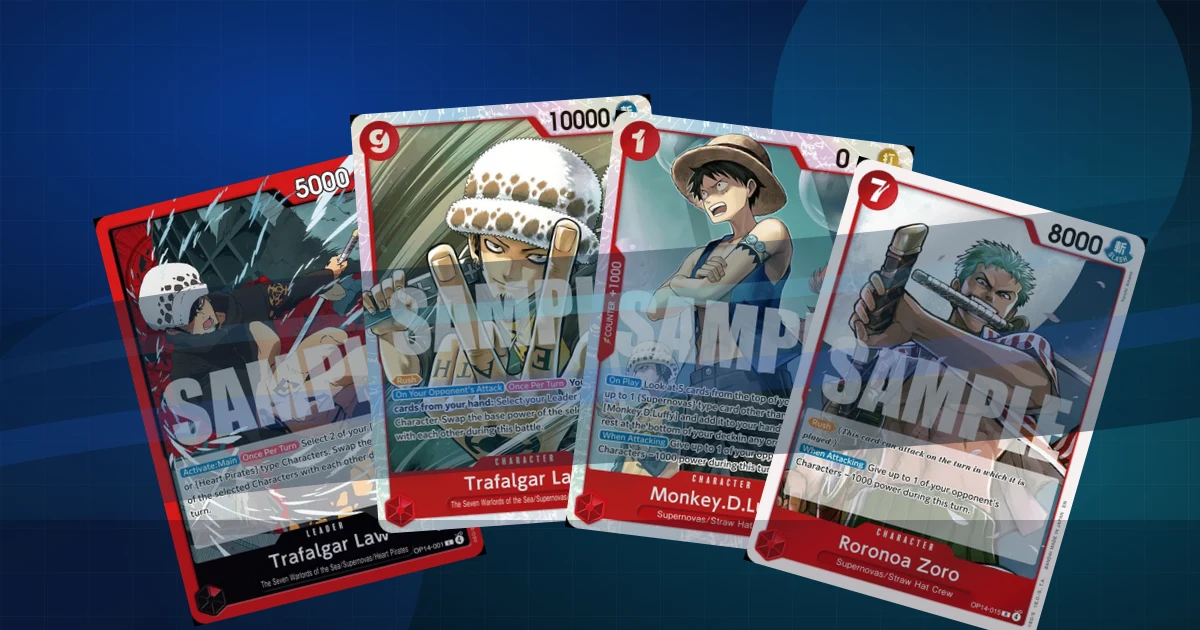
One Piece TCG Rarity Guide: Symbols, Parallel Rares & Value Tiers (2026)
One Piece TCG rarity has two layers: the gameplay card’s printed rarity and the specific printing’s art or promotional treatment. Those layers are often collapsed in marketplace titles, which is why “rare,” “parallel,” “alt art,” and “promo” can sound interchangeable even when they are not.
How do rarity symbols work in One Piece TCG?
The printed rarity appears near the card number. Common symbols include:
- C — Common
- UC — Uncommon
- R — Rare
- SR — Super Rare
- SEC — Secret Rare
- L — Leader
- P — Promotional classification used on some records/products
Read the symbol from the card itself. A database or seller title can be incomplete, and a parallel may keep the underlying gameplay card number while changing the artwork and treatment.
Parallel rare, alternate art, and full art
A parallel is another printing of an existing card. It may use alternate artwork, a borderless or full-art layout, a different foil or texture, or a special product treatment. “AA” commonly means alternate art; “FA” commonly means full art. Those are useful catalog labels, but the full card code and image are safer identifiers than an abbreviation.
A Leader can have a regular Leader printing and a much more collectible alternate-art Leader. They share gameplay text but do not share the same market value.
Actual counts in the Haki database
Haki catalog treatment counts
4,622 exact printings · snapshot 2026-06-18
| Catalog value | Meaning in this feed | Printings |
|---|---|---|
| C | Base / regular catalog treatment | 2,091 |
| AA | Alternate art | 1,757 |
| FA | Full art | 566 |
| TR | Treasure rare | 11 |
| PROMO | Promotional printing | 197 |
These are database treatment fields, not official booster pull-rate counts. Always read the symbol printed on the physical card.
The current export uses broad treatment values such as C, AA, FA, TR, and PROMO. It does not preserve every printed C/UC/R/SR/L/SEC symbol as a separate analytics field, so it would be misleading to claim official pull-rate counts from this dataset.
Why rarity matters for collectors
Rarity can affect supply, but value also depends on the exact product, character demand, artwork, competitive use, condition, language, and the number of real buyers. A playable SR may be worth more than a weak SEC; a scarce promo or alternate art may sit far above both.
The August 10, 2026 production snapshot illustrates that difference. Its screened high end included a Championship Top Players Pack Sanji OP07-064-v2 at $999.99, alternate-art prize Tashigi OP12-031-v2 at $999.99, alternate-art prize Charlotte Katakuri OP03-123-v2 at $990.00, alternate-art Sogeking OP03-122-v2 at $960.59, and Shanks OP09-004-v6 at $931.31.
Those are tracked TCGPlayer fields after a freshness and cross-market sanity screen, not guaranteed sales. More importantly, the examples span event, prize, alternate-art, and product printings. No single printed symbol explains the high end; exact distribution and treatment matter.
How to identify a valuable printing
- Match the full card code and variant suffix.
- Compare the artwork with the card database.
- Confirm set, product, and language.
- Inspect foil, texture, stamp, and border treatment.
- Grade the physical condition separately.
- Compare the exact printing—not merely the character name—on marketplaces.
Pull rates and chase cards
Official products do not all use one universal pull-rate table. Booster displays, premium collections, event packs, and promotional distribution work differently. Do not infer odds from the database count: it catalogs known printings, not the number of copies printed or pulled.
For a set you are opening, use its card list, checklist, chase, and price pages to identify the included printings, then consult the product’s official information for configuration.
FAQ
Is Secret Rare always more valuable than Super Rare?
No. Printed rarity is only one input. Competitive demand, character popularity, parallel treatment, supply, and condition can reverse the expected order.
Is alternate art a different card?
It is a distinct collectible printing, even when it shares gameplay text and a base card number. Track it separately by image and variant code.
What does TR mean?
In the Haki catalog, TR identifies Treasure Rare treatment records. Confirm the exact set and image because treatment naming can vary across products and marketplaces.
Where can I check the exact value?
Open the exact printing in the One Piece card database. Its page shows the tracked market fields, price date, and marketplace link.
Related Articles
- How to Grade One Piece Cards: PSA, BGS & CGC Guide (2026)
A step-by-step One Piece card grading guide: inspect condition, choose PSA, BGS, or CGC, declare value, pack safely, submit, and check the result.
- How to Spot Fake One Piece TCG Cards (2026 Guide)
A safe counterfeit-screening checklist for One Piece TCG cards: exact-print matching, seller evidence, text, color, cut, foil, card back, slabs, and next steps.
- Most Expensive One Piece Cards in 2026: Live Top 10 Prices
The top 10 tracked One Piece TCG card prices checked August 10, 2026, ranked by exact printing with TCGPlayer and Cardmarket sanity checks.
Scan and track every One Piece TCG card.
Identify cards with the Haki TCG scanner, check dated market prices, build decks, and manage your collection.