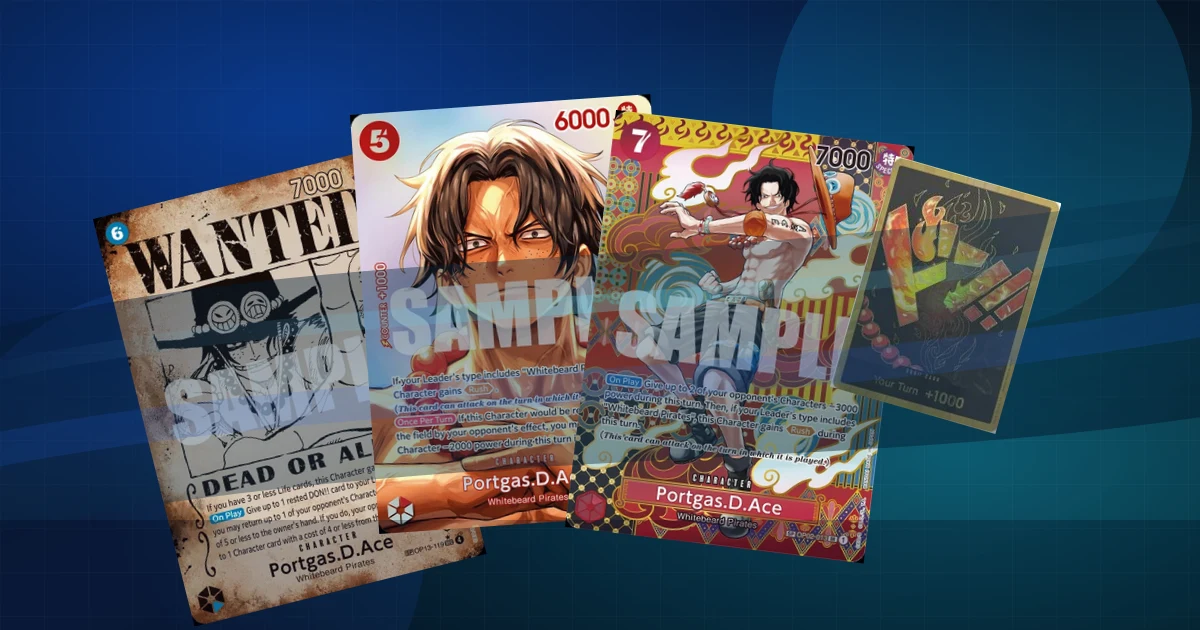
How to Spot Fake One Piece TCG Cards (2026 Guide)
No single visual tell proves that a One Piece card is authentic or fake. Print variation, language, reprints, parallel treatments, lighting, camera processing, and normal wear can all create differences. The safest approach is layered: identify the exact printing, compare it with known references, evaluate the seller and provenance, and use a reputable professional when the value justifies it.
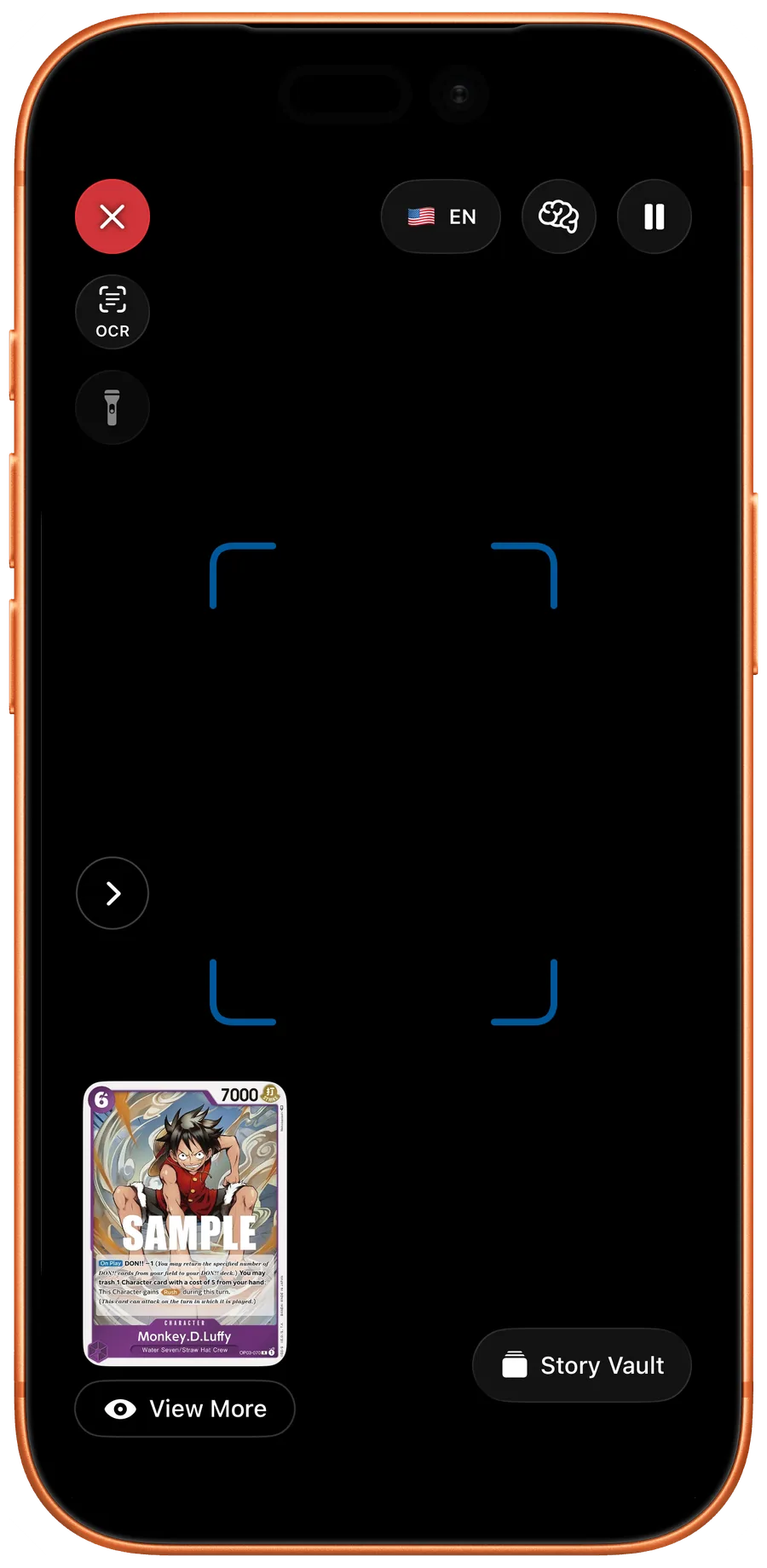
Haki’s scanner helps identify a candidate card record. It is not an authenticity detector and does not issue a fake/real verdict.
Step 1: identify the exact printing
Before looking for defects, make sure you are comparing like with like:
- Full set/card code and any catalog variant suffix
- English, Japanese, or another authorized language
- Base, alternate-art, promotional, or premium treatment
- Product or event source
- Front artwork and card-back design
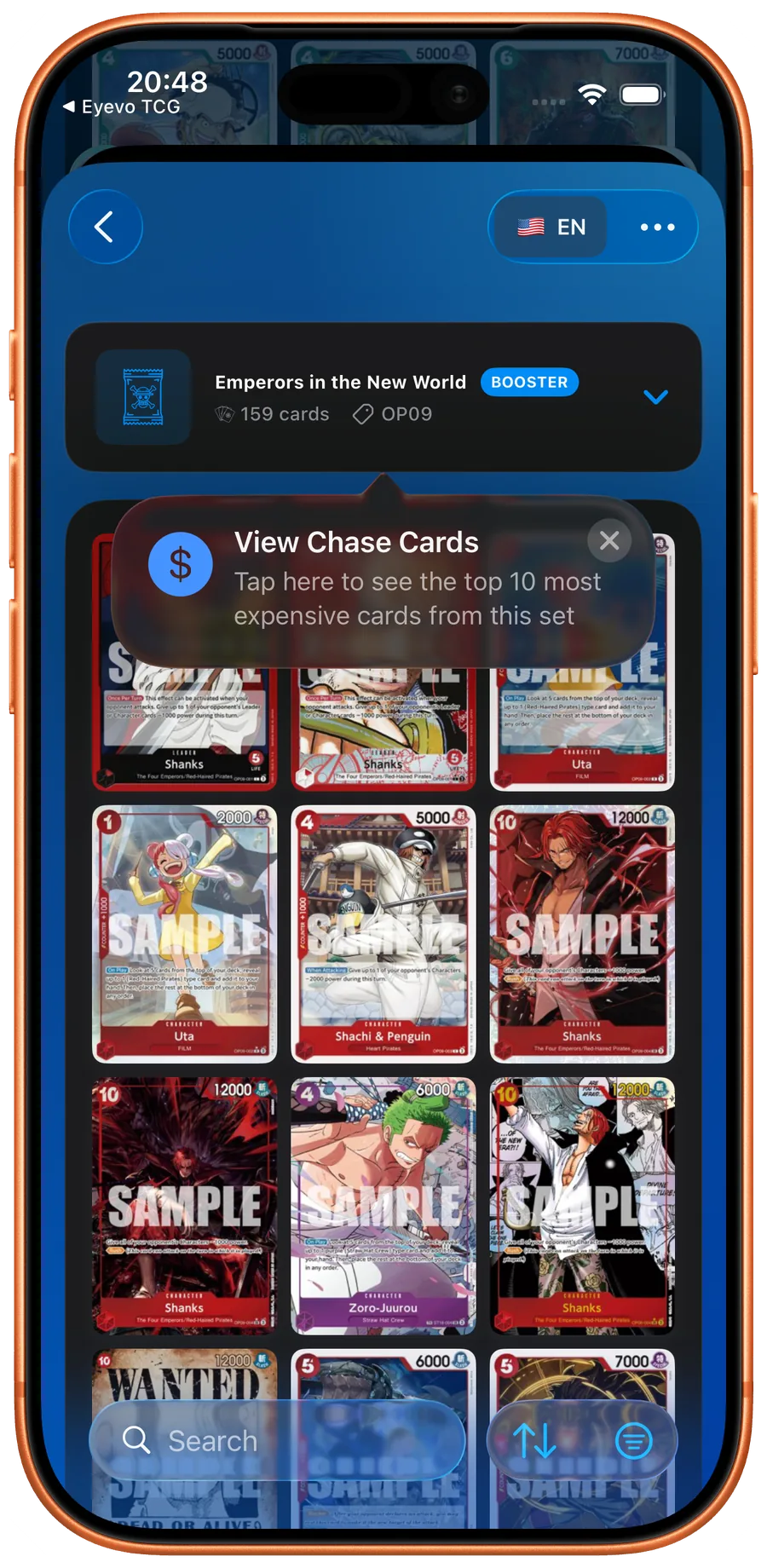
Open the candidate in the One Piece card database and compare the whole layout. A mismatch may mean you selected the wrong printing, not that the physical card is fake.
The counterfeit screening checklist
1. Seller, price, and provenance
Review account history, detailed feedback, return terms, and whether the seller can explain where the card came from. A large discount is a reason to slow down, but it is not proof by itself. Ask for a timestamped photo when a listing uses stock images.
2. Text and small print
Compare card name, rules text, punctuation, copyright line, card code, symbols, and tiny labels with the same exact printing. Look for inconsistent letter shapes, spelling errors, uneven ink, or elements in the wrong position. Compression in a marketplace photo can blur real text, so request an original close-up before judging.
3. Color and registration
Compare skin tones, dark gradients, fine line art, and the alignment of color layers. Do this beside a known authentic card from the same product when possible. Different phone cameras and white balance can change color dramatically; a screenshot alone is weak evidence.
4. Cut, corners, and dimensions
Compare size, corner radius, and edge finish with an authentic standard card. A visibly wrong size or unusual cut is concerning, but normal factory variation exists. Do not bend, tear, peel, soak, or perform another destructive test.
5. Foil and texture
Tilt the suspect card and a known authentic copy under the same light. Compare where foil appears, how the pattern moves, and whether texture aligns with the artwork. The correct treatment is printing-specific; there is no one foil direction or universal emboss rule for every rare One Piece card.
6. Card back
Check logo placement, color, sharpness, border width, and registration. Compare with the correct language/product era. Wear and camera perspective can affect centering, so use a straight-on image.
7. Listing consistency
The title, photos, description, price, and certification details should describe the same item. Watch for a base-card code in the text with a premium-art image, copied certification photos, or different cards between listing images.
Photos to request from an online seller
Ask for:
- Straight-on front and back photos
- Close-ups of all four corners
- Angled-light photos or a short video of foil/texture
- The card code and copyright line in focus
- A timestamp with the seller’s name and current date
- Certification number and holder details if graded
Reverse-image-searching listing photos can reveal copied images, but a unique photo still does not authenticate the card.
What the Haki scanner can and cannot do
The scanner can narrow a card to a likely database record and help you compare the image, code, set, and tracked market fields. A failed or low-confidence match can result from glare, sleeves, camera angle, damage, language, or an unsupported printing—not only a counterfeit. A successful identity match also does not prove the physical materials are authentic.
Graded cards and fake slabs
A reputable grading company adds professional authentication and an online certification record, but buyers should still verify the certification number on the grader’s official site and compare the label details and card image when available. A copied certification number or counterfeit holder is possible.
For raw-card submissions, follow the PSA, BGS, and CGC grading guide. Do not send a card merely to create a “paper trail” if the likely outcome and fees do not make sense.
What to do if you suspect a fake
- Stop the transaction or do not relist the card as authentic.
- Preserve the listing, messages, receipt, packaging, and clear photos.
- Use the marketplace or payment provider’s counterfeit-dispute process within its deadline.
- Ask a reputable local card shop, experienced dealer, or grading/authentication service for an in-person opinion when warranted.
- Follow local law and platform instructions for returns or disposal; do not circulate a suspected counterfeit.
Avoid publicly accusing an individual seller based on one blurry image. Focus on the item evidence and the platform’s process.
Common mistakes
- Comparing the wrong parallel or language
- Treating a scanner result as authentication
- Believing one physical measurement is universal
- Using destructive “tests” copied from social media
- Trusting an asking price or stock photo
- Assuming a slab is authentic without checking its certification
- Ignoring normal print variation and condition wear
FAQ
Can Haki tell me whether a One Piece card is fake?
No. Haki can identify a candidate printing and provide reference data. Authentication requires physical and contextual checks, and high-value uncertainty may require a professional.
Does a low price prove a card is fake?
No. It is a risk signal that justifies more evidence. The seller may need a quick sale, may have misidentified the printing, or may be using a deceptive listing.
Is there one foil pattern that all real cards use?
No. Foil and texture vary by set, rarity, parallel, and product. Compare with the same exact authentic printing.
Should I do a rip, bend, light, or liquid test?
No. Destructive tests can ruin an authentic card and may still produce ambiguous results. Use non-destructive comparison and professional authentication.
Where should I start?
Find the exact printing in the card database, gather clear evidence, and use the scanner only as an identification aid.
Related Articles
- How to Grade One Piece Cards: PSA, BGS & CGC Guide (2026)
A step-by-step One Piece card grading guide: inspect condition, choose PSA, BGS, or CGC, declare value, pack safely, submit, and check the result.
- Most Expensive One Piece Cards in 2026: Live Top 10 Prices
The top 10 tracked One Piece TCG card prices checked August 10, 2026, ranked by exact printing with TCGPlayer and Cardmarket sanity checks.
- Should You Grade Your One Piece Card? ROI Calculator + Guide
A practical grading ROI framework for One Piece TCG: when grading makes sense, what costs to include, and how to estimate upside.

Scan and track every One Piece TCG card.
Identify cards with the Haki TCG scanner, check dated market prices, build decks, and manage your collection.